Evaluating Staniki for Elegant Script Typography
In the landscape of digital and print design, selecting the right typeface is a critical decision that influences readability, brand perception, and overall aesthetic harmony. Among the vast array of available fonts, Staniki has emerged as a notable option for designers seeking a script style that balances elegance with visual impact. This evaluation explores the characteristics of Staniki, its functional capabilities, and the specific scenarios where it serves as an effective tool in a designer's toolkit.
Understanding Staniki: A Modern Script Solution
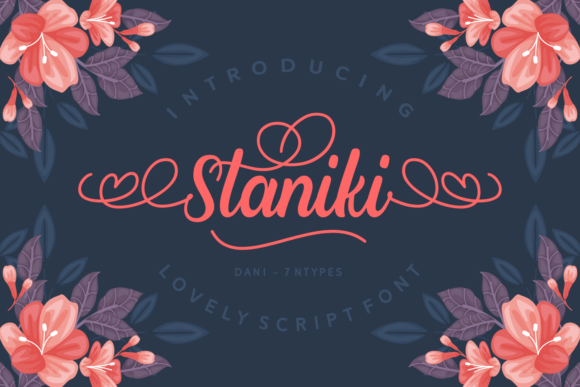
Staniki is a script font designed to mimic the fluidity of hand-lettering while maintaining the structural consistency required for professional applications. Unlike rigid serif or sans-serif typefaces, Staniki features dynamic strokes that vary in thickness, creating a sense of movement across the page. The font is particularly distinguished by its inclusion of lovely swashes and beautiful alternates, which allow for significant customization within a single family.
The primary appeal of this typeface lies in its ability to convey a personal touch without sacrificing legibility. It is not merely a decorative element but a functional component that can anchor a design concept. By offering a range of character variations, Staniki enables designers to break the monotony of standard text, providing opportunities to create unique typographic hierarchies. Whether used for headlines, invitations, or branding elements, the font brings a level of sophistication that is often difficult to achieve with more utilitarian typefaces.
Key Features and Functional Benefits
When evaluating Staniki for a project, several technical and aesthetic features stand out as key benefits. These attributes contribute to its versatility and make it suitable for various design contexts.
- Extensive Alternate Characters: One of the most valuable aspects of Staniki is the availability of alternate glyphs. These are alternative versions of standard letters that offer different stroke endings or connections. Utilizing these alternates allows designers to avoid repetitive patterns in long text blocks and add a custom feel to every word.
- Dynamic Swashes: The font includes ornamental swashes that extend from certain letters. These flourishes can be used to frame content, connect disparate elements, or simply add a striking visual accent. When applied judiciously, they enhance the elegant nature of the design without overwhelming the viewer.
- Elegant yet Striking Appearance: The balance between formality and flair is a core strength. The letterforms are refined enough to appear professional but possess enough character to be memorable. This duality makes it effective for projects requiring both authority and artistic expression.
- Versatile Styling Options: Because of its script nature, Staniki pairs well with simpler geometric or classic serif fonts. This contrast creates a balanced composition where the script acts as a focal point while the supporting text ensures clarity.
Practical Applications and Ideal Use Cases
Determining whether Staniki aligns with your goals requires understanding where it performs best. It is not a universal solution for all typography needs, but rather a specialized tool for specific situations.
The font is particularly strong in editorial and publication design. Headlines for fashion magazines, lifestyle blogs, or luxury product catalogs benefit from the sophisticated look of Staniki. In these contexts, the goal is often to evoke a mood of exclusivity or high-end quality, and the font's swashes contribute significantly to that atmosphere.
Event branding and stationery represent another area where this typeface excels. Weddings, galas, and formal invitations often rely on script fonts to convey warmth and celebration. The beautiful alternates in Staniki allow for personalized monograms and intricate layouts that feel bespoke. The elegance of the font helps elevate the perceived value of the event materials.
Additionally, packaging design for artisanal goods, cosmetics, or gourmet foods can leverage Staniki to communicate craftsmanship. When a product aims to highlight its handmade origins or premium ingredients, the organic flow of the script reinforces the narrative of quality and attention to detail.
Tradeoffs and Design Considerations
While Staniki offers significant advantages, a balanced evaluation must also consider its limitations. No single font is perfect for every scenario, and understanding these tradeoffs is essential for making an informed decision.
The most significant consideration is readability at small sizes. Script fonts, by their nature, can become difficult to read when scaled down or viewed from a distance. The complexity of the swashes and alternates may clutter the visual field if the font size is too small. Therefore, Staniki is generally unsuitable for body copy, footnotes, or dense blocks of information. It should be reserved for short phrases, titles, or emphasis points.
Limited weight options are another factor to evaluate. Many script families, including Staniki, focus primarily on a single weight to maintain the integrity of the hand-drawn aesthetic. If a project requires a wide range of weights (light, regular, bold) to establish a complex hierarchy, Staniki may require pairing with a robust sans-serif or serif system to fill the gaps. Relying solely on one script family for an entire layout can lead to a lack of structural variety.
Furthermore, there is the issue of contextual appropriateness. The elegant and striking nature of Staniki implies a certain tone. Using it for corporate reports, legal documents, or technical manuals would likely be inappropriate, as the font's personality might undermine the seriousness of the content. Designers must ensure that the "voice" of the font matches the message being conveyed.
Alternatives and Decision-Making Insights
If Staniki does not fully meet the requirements of a specific project, several alternatives may be worth considering depending on the desired outcome. For designers seeking a script with greater legibility and less ornamentation, a "handwritten" style font with minimal swashes might be preferable. These fonts often work better for longer text passages or modern, minimalist designs.
Conversely, if the project demands maximum impact and extreme flourish, a more calligraphic or brush-style font could provide the necessary drama. However, these often come with even stricter limitations regarding usability compared to Staniki.
To determine if Staniki is the right choice, designers should ask specific questions during the selection process:
- What is the primary function of the text? If it is for decoration or headlines, Staniki is a strong candidate. If it is for reading dense information, it is likely not.
- Does the brand voice match the font's personality? Does the client want to appear elegant and striking, or do they need to appear neutral and straightforward?
- How will the font interact with other typefaces? Can the design support the visual weight of the swashes without becoming chaotic?
- Are the technical requirements met? Will the font render correctly across all intended platforms, and are the necessary characters included in the license?
Conclusion
Staniki represents a compelling option for designers looking to inject elegance and character into their projects. Its combination of lovely swashes and beautiful alternates provides a versatile foundation for creating striking visuals. However, like any typeface, its success depends on thoughtful application. By acknowledging its strengths in editorial and branding contexts while respecting its limitations in body text and serious corporate communications, designers can effectively utilize Staniki to achieve their creative goals.
Ultimately, the decision to use Staniki should be driven by the specific needs of the project and the message the design intends to convey. When used with precision and an understanding of its stylistic nuances, it serves as a powerful asset in the typographic arsenal.