Babone: The Monoline Script Reshaping Modern Brand Identity
In the rapidly evolving landscape of digital design and branding, the demand for authenticity is louder than ever. Professionals, creators, and entrepreneurs are increasingly moving away from the sterile perfection of geometric sans-serifs and rigid serif fonts. Instead, they are seeking typefaces that convey human touch, spontaneity, and a distinct narrative voice. Enter Babone, a monoline script font family that has quietly become a cornerstone for designers looking to inject personality into their work without sacrificing structural integrity.
This article explores why Babone is capturing the attention of the creative community, how it aligns with current market trends, and practical strategies for integrating this fully PUA-encoded typeface into diverse professional workflows.
Defining the Babone Aesthetic
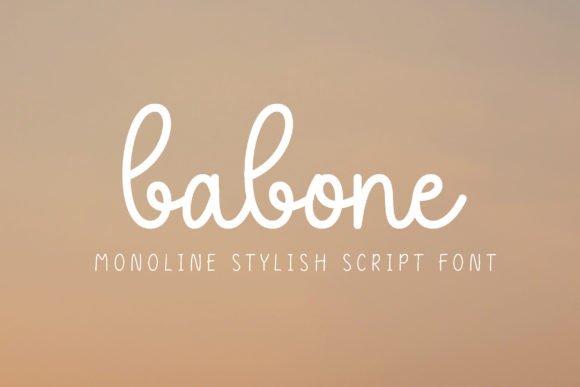
Babone is more than just a decorative font; it is a carefully crafted monoline script family available in both regular and italic styles. Its defining characteristic is its consistent stroke width, which gives it a clean, modern feel while retaining the fluid motion of handwritten calligraphy. Unlike traditional scripts that often rely on dramatic thick-and-thin transitions to create drama, Babone maintains a uniform line weight. This approach creates a visual rhythm that is easy to read yet undeniably expressive.
The font's versatility stems from its balance between structure and freedom. It mimics the natural flow of a marker or brush but avoids the chaotic legibility issues often associated with freehand scripts. Whether used for a headline on a social media post or a subtle accent in a book cover, Babone offers a unique blend of professionalism and approachability. It bridges the gap between corporate clarity and artistic flair, making it an ideal choice for brands that want to appear established yet innovative.
The Technical Edge: Fully PUA Encoded
For technical professionals and developers, the usability of a font is paramount. Babone addresses this need through its fully PUA (Private Use Area) encoding. In the world of typography, the Private Use Area allows for custom character mapping, ensuring that special ligatures, swashes, and alternate glyphs can be accessed efficiently within any character map utility.
This feature significantly streamlines the workflow for designers who need precise control over their text elements. Instead of manually searching for specific alternates or struggling with inconsistent rendering across different software platforms, users can access every glyph directly. This level of technical robustness ensures that the final output remains consistent whether the project is destined for print, web, or mobile applications.
Aligning with Contemporary Market Trends
To understand the rising prominence of Babone, one must look at the broader shifts occurring in consumer behavior and design philosophy. The current market is characterized by a desire for "human-centric" design. Consumers are fatigued by algorithmic content and generic templates. They crave connections that feel genuine, personal, and crafted by real people.
The Rise of Personal Branding
Freelancers, consultants, and solopreneurs are no longer just selling services; they are building personal empires. Their visual identity needs to reflect their individual story. Babone fits perfectly into this ecosystem. Its monoline style suggests confidence and clarity, while the script nature implies creativity and warmth. When a freelancer uses Babone for their portfolio or client proposals, they are signaling that their work is thoughtful and bespoke.
Social Media and Visual Hierarchy
In the era of short-form video and scrolling feeds, attention spans are measured in seconds. Marketers need typography that stops the scroll. Babone’s distinct shape and high contrast against white backgrounds make it highly effective for social media graphics. It stands out in a sea of standard Helvetica or Arial posts, offering immediate visual interest. Furthermore, because it is a monoline script, it scales well on small mobile screens where complex serifs might blur or become illegible.
Practical Applications Across Industries
The adaptability of Babone allows it to transcend niche markets and find utility in a wide array of industries. Below are several key areas where this font is proving to be a strategic asset.
- Apparel and Merchandise: For t-shirt designers and streetwear brands, Babone offers a contemporary take on vintage aesthetics. The monoline style works exceptionally well for graphic tees, providing a clean outline that looks great when screen printed or embroidered. It captures the casual, cool vibe of modern fashion without feeling dated.
- Children's Publishing: Creating content for children requires a delicate balance between fun and readability. Babone’s rounded edges and friendly flow make it an excellent candidate for children's books. It invites young readers in without being overly childish, allowing illustrators to pair it with vibrant artwork seamlessly.
- Cover Design and Editorial: Book covers, especially in genres like self-help, lifestyle, and memoir, benefit from the narrative quality of a script font. Babone can serve as the primary title treatment, suggesting a story that is both intimate and authoritative. Its italic variant adds a layer of dynamism, perfect for subtitles or taglines that need to stand out.
- Sticker Culture and Packaging: The sticker economy is booming, driven by a culture of customization and expression. Babone is ideal for creating stickers that convey quick messages, inside jokes, or brand slogans. Its clear letterforms ensure that even small-scale prints remain legible and impactful.
Optimizing Workflows with Babone
As creative tools become more integrated with AI and automation, the role of the designer is shifting from execution to curation. However, the need for high-quality assets remains constant. Integrating Babone into your design stack requires a shift in how you approach hierarchy and composition.
Strategic Pairing
One of the most common mistakes designers make is overusing script fonts. To maximize the impact of Babone, it should be paired with a neutral, highly readable sans-serif body text. The contrast between the structured body copy and the expressive Babone headlines creates a sophisticated visual hierarchy. This pairing not only enhances readability but also directs the viewer's eye exactly where the designer intends.
Leveraging the Regular and Italic Variants
The inclusion of both regular and italic styles in the Babone family provides designers with a powerful tool for emphasis. While the regular style is perfect for main titles and logos, the italic version introduces movement and urgency. Use the italic style sparingly for call-to-action buttons, pull quotes, or to highlight specific keywords within a paragraph. This variation adds a dynamic rhythm to static layouts, preventing designs from feeling flat or monotonous.
The Future of Typography in Digital Ecosystems
Looking ahead, the intersection of technology and design will continue to favor fonts that are versatile and technically sound. As websites become more immersive and e-commerce platforms evolve, the ability to load fonts quickly and render them consistently is critical. Babone’s efficient encoding and clean geometry make it a forward-thinking choice for these environments.
Furthermore, the trend toward "brutalist" and "neo-brutalist" design aesthetics is gaining traction. These styles often mix raw, unpolished elements with structured grids. Babone fits naturally into this movement, offering a soft counterpoint to hard lines and bold colors. It brings a sense of humanity to digital interfaces that are otherwise dominated by cold data and rigid structures.
Conclusion: A Tool for Authentic Expression
In a digital world saturated with generic templates, standing out requires a deliberate choice of visual language. Babone represents a convergence of technical precision and artistic expression. By offering a monoline script that is fully PUA encoded and available in multiple weights, it empowers professionals to tell their stories with clarity and charm.
Whether you are designing a t-shirt collection, illustrating a children's book, or crafting a social media campaign, Babone provides the flexibility needed to meet modern demands. It is not merely a font; it is a strategic asset that helps brands connect with audiences on a deeper, more emotional level. As the industry continues to prioritize authenticity and user experience, the adoption of thoughtful, well-engineered typefaces like Babone will only become more essential.
For creators ready to elevate their projects, exploring the capabilities of Babone is a logical next step. By understanding its strengths and applying it within the context of broader design trends, you can create work that is not only visually striking but also resonant with the values of today's consumers.